Adrian Serrin: “I’ve Never Been Very Interested in Being the Smartest Person in the Room”
The Halden Ledger sits down with Avelor founder Adrian Serrin for an extended conversation about engineering, failure, control, money, Themelion, risk, and the difference between confidence and certainty.

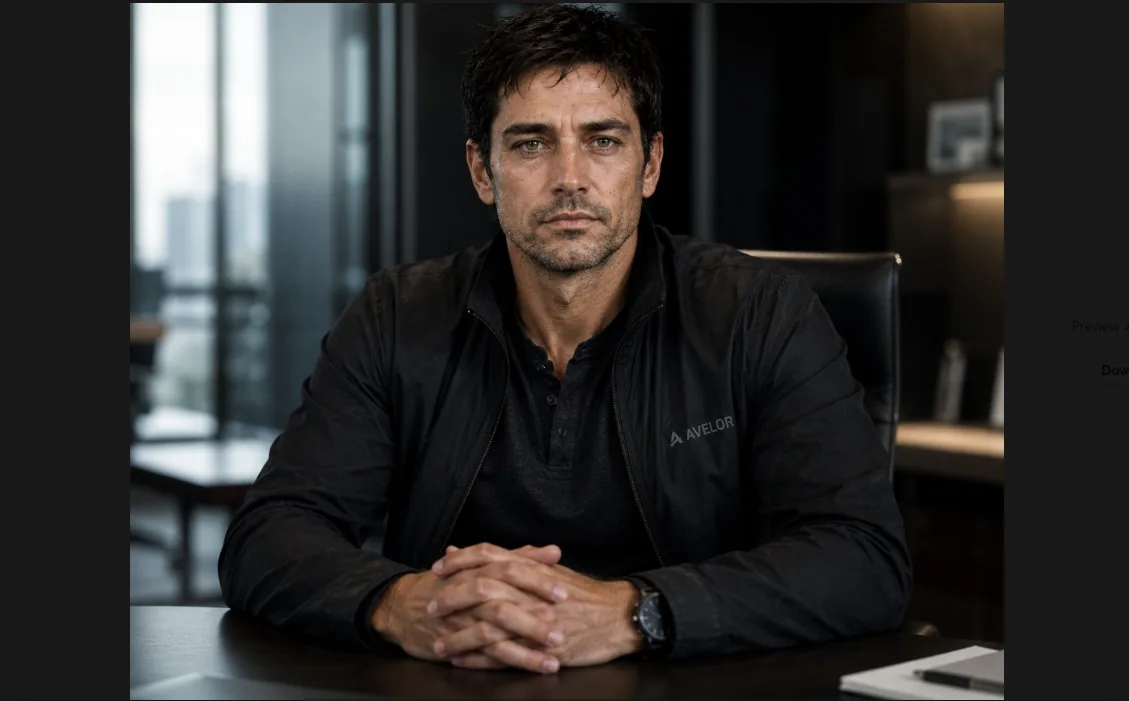
Engineering, ambition and tradeoffs
HALDEN LEDGER: Avelor has become one of the most visible aerospace companies in the world. Do you still think of yourself as an engineer?
ADRIAN SERRIN: More than anything else, probably.
HALDEN: Even now?
SERRIN: Especially now. The job changes, but the habit doesn’t. You look at a system, figure out what it’s doing, figure out what it should be doing, and then start closing the gap.
HALDEN: That makes running a company sound very mechanical.
SERRIN: People usually say that when they think engineering is about machines. Most of it is about tradeoffs.
HALDEN: Were you always ambitious?
SERRIN: No. Curious, yes. Restless, definitely. Ambition came later.
HALDEN: What changed?
SERRIN: I realized that being right about something and being able to do something about it were two different skills.
HALDEN: Avelor gave you the second one?
SERRIN: Avelor gave me a place to build things that were too expensive, too complicated, or too early for almost anyone else to want.
HALDEN: That sounds like a terrible business plan.
SERRIN: It was, for a while.
HALDEN: What do you actually enjoy about running Avelor?
SERRIN: The early part of things. When nobody knows exactly what the answer is yet.
HALDEN: And the part you enjoy least?
SERRIN: Meetings where everyone already agrees.
HALDEN: Why?
SERRIN: Either the problem is trivial or somebody isn’t talking.
Disagreement, redundancy and being wrong
HALDEN: You have a reputation for hiring people who disagree with you.
SERRIN: I try to.
HALDEN: That sounds exhausting.
SERRIN: It’s cheaper than being wrong.
HALDEN: Do you think disagreement is always useful?
SERRIN: No. Some disagreement is just noise. The useful kind forces you to expose the assumptions underneath the answer.
HALDEN: How do you tell the difference?
SERRIN: Usually by asking whether the person can tell me what evidence would change their mind. If the answer is nothing, we’re not doing engineering anymore.
HALDEN: Avelor is famous for redundancy. Duplicate systems. Backup systems. Sometimes backups for the backups. Is that the same instinct?
SERRIN: Related. Redundancy is an admission that the first plan can fail.
HALDEN: That sounds obvious.
SERRIN: It is obvious. People still resist it because redundancy looks inefficient right up until the primary system stops working.
HALDEN: Do you build companies the same way?
SERRIN: You should. If one person leaving breaks the organization, you did not build an organization. You built a dependency.
HALDEN: Including you?
SERRIN: Especially me.
HALDEN: Do you actually believe Avelor would be fine without you?
SERRIN: Today? Not in every area. Eventually it has to be.
What he looks for in people
HALDEN: What makes someone interesting to you in an interview?
SERRIN: Someone who can say, “I don’t know,” without apologizing for it.
HALDEN: That’s unusual in aerospace.
SERRIN: That’s unusual everywhere.
HALDEN: What about intelligence?
SERRIN: Useful. Overrated by intelligent people.
HALDEN: What matters more?
SERRIN: Judgment. Curiosity. Knowing when the evidence has changed enough that you should change your mind.
HALDEN: Do you change your mind easily?
SERRIN: No.
HALDEN: That sounded very self-aware.
SERRIN: I’ve had practice.
HALDEN: What is the fastest way for someone to lose your confidence?
SERRIN: Hide a problem because they think I want good news.
HALDEN: And the fastest way to earn it?
SERRIN: Bring me bad news early, with evidence, and tell me what you think we should do next.
Failure and control
HALDEN: Avelor has had very public failures. How much do those still bother you?
SERRIN: All of them.
HALDEN: Even the ones that led to better systems?
SERRIN: Learning from a failure does not retroactively make the failure good.
HALDEN: Then what is the useful way to think about it?
SERRIN: You separate guilt from information. If something broke because of a bad assumption, you find the assumption. If it broke because someone made a mistake, you ask what allowed one mistake to become catastrophic. If you stop at blame, you usually learn less than you could.
HALDEN: People describe you as controlling.
SERRIN: Some of them are probably right.
HALDEN: That was easier than expected.
SERRIN: You asked a simple question.
HALDEN: What do you try to control?
SERRIN: Inputs I can actually influence. Schedule. Testing. Staffing. Design margins. How quickly information reaches the people who need it.
HALDEN: And what can’t you control?
SERRIN: More than I would like.
HALDEN: Does that bother you?
SERRIN: Of course. The trick is not confusing discomfort with authority.
Before Avelor
HALDEN: What were you like before Avelor?
SERRIN: Broke.
HALDEN: Beyond financially.
SERRIN: Less patient. More convinced I could solve everything myself.
HALDEN: Can you?
SERRIN: No. That was an expensive lesson.
HALDEN: What was the first thing you bought when you had real money?
SERRIN: A decent mattress.
HALDEN: Really?
SERRIN: Absolutely. I had been sleeping on something that was probably violating international law.
HALDEN: No sports car?
SERRIN: Eventually.
HALDEN: There it is.
SERRIN: I didn’t say I became enlightened.
Money and what it changes
HALDEN: Do you enjoy being wealthy?
SERRIN: Parts of it.
HALDEN: Which parts?
SERRIN: Not thinking about ordinary emergencies. A broken transmission isn’t a crisis. A medical bill isn’t a crisis. Your parents need something, you do it. People who have always had money underestimate how much mental space that buys you.
HALDEN: And the parts you don’t enjoy?
SERRIN: People deciding who you are before they’ve met you.
HALDEN: Has money changed your tolerance for risk?
SERRIN: It changed what kinds of risk I can absorb.
HALDEN: That sounds like a distinction you make carefully.
SERRIN: Because it matters. Being able to survive a bad outcome is not the same as the bad outcome becoming acceptable.
HALDEN: Do you think billionaires are given too much influence?
SERRIN: Obviously.
HALDEN: Including you?
SERRIN: Obviously.
HALDEN: Then why use it?
SERRIN: Because declining influence does not redistribute it responsibly. It usually just gives it to someone else.
Why spaceflight
HALDEN: Why spaceflight?
SERRIN: Because access changes everything.
HALDEN: Access to space?
SERRIN: Access to anything. If something is expensive enough or difficult enough to reach, only a few people get to decide what happens there. Lower the cost, improve reliability, increase frequency, and suddenly the number of possible uses explodes.
HALDEN: Is that what Avelor is trying to do?
SERRIN: In the simplest terms, yes.
HALDEN: You make it sound almost mundane.
SERRIN: That’s the goal.
HALDEN: Spaceflight becoming mundane?
SERRIN: Routine is more valuable than spectacular.
HALDEN: That may be the least romantic description of spaceflight I’ve ever heard.
SERRIN: Romantic gets you a documentary. Routine gets you infrastructure.
Themelion
HALDEN: Themelion may be the clearest example of Avelor building before there was an obvious market. Why commit that early?
SERRIN: Because some capabilities take longer to build than the demand signal takes to appear.
HALDEN: Meaning?
SERRIN: If you wait until everyone agrees something is necessary, you may already be years late.
HALDEN: That sounds like a philosophy that could justify almost any expansion.
SERRIN: It could. Which is why you still need evidence, milestones and limits.
HALDEN: What was the evidence for Themelion?
SERRIN: Launch cost was falling. Reuse was improving. Robotic excavation was getting better. Water access near the lunar south pole was increasingly credible. None of those things alone created a settlement. Together they made one less unreasonable every year.
HALDEN: Do you consider Themelion a colony?
SERRIN: No.
HALDEN: Why not?
SERRIN: Because words should describe reality, not aspiration. It still depends heavily on Earth.
HALDEN: What would make you change the word?
SERRIN: When losing a shipment from Earth becomes a problem instead of an existential threat.
Risk and responsibility
HALDEN: You have made a career out of taking risks with systems people may eventually depend on. How do you think about responsibility?
SERRIN: The more people depend on the system, the less interesting your appetite for risk becomes.
HALDEN: Explain that.
SERRIN: An experimental vehicle can tolerate things a transportation network cannot. A prototype can fail in ways a hospital oxygen system cannot. Capability creates obligations. The acceptable failure rate changes when the consequences change.
HALDEN: Is that something engineers underestimate?
SERRIN: Engineers underestimate social consequences. Politicians underestimate technical constraints. Investors underestimate time. Everyone has a preferred blind spot.
HALDEN: What is yours?
SERRIN: Probably believing a difficult problem can be made manageable if you decompose it far enough.
HALDEN: You think that is wrong?
SERRIN: Sometimes the decomposition hides the thing that matters.
Confidence, certainty and preparation
HALDEN: Do you think you would like you if you read about yourself?
SERRIN: Probably not.
HALDEN: Why?
SERRIN: The version of me that gets written about is usually much more certain than I am.
HALDEN: You’re perceived as very confident.
SERRIN: Confidence and certainty aren’t the same thing.
HALDEN: What’s the difference?
SERRIN: Confidence is being willing to make a decision when you don’t have everything you want. Certainty is pretending you do.
HALDEN: How much uncertainty is too much?
SERRIN: Depends on the decision.
HALDEN: That sounds evasive.
SERRIN: It’s the opposite. A reversible decision can tolerate much more uncertainty than an irreversible one. People like universal rules because they remove judgment. Unfortunately, judgment is usually the part you still need.
HALDEN: You spend enormous amounts of money preparing for futures that may not happen.
SERRIN: Insurance works the same way.
HALDEN: Most insurance policies do not include lunar industrial bases.
SERRIN: Most policies are less interesting.
HALDEN: How do you know when preparation becomes paranoia?
SERRIN: When the preparation starts creating more harm than the risk it is supposed to reduce.
Time
HALDEN: What scares you?
SERRIN: Waste.
HALDEN: Of money?
SERRIN: Time.
HALDEN: You think about time a lot?
SERRIN: Everybody does. Most people just call it something else.
HALDEN: What do they call it?
SERRIN: Urgency. Regret. Deadlines. Opportunity cost. Getting older.
HALDEN: Do you feel like you are running out of it?
SERRIN: Everyone is.
HALDEN: That is a bleak answer.
SERRIN: Only if you think a limit makes something meaningless.
Outside the company
HALDEN: Do you have hobbies?
SERRIN: Chess, occasionally. Hiking. I cook badly.
HALDEN: Badly by your standards or objectively badly?
SERRIN: Objectively. I have witnesses.
HALDEN: What do you cook?
SERRIN: Things that become other things.
HALDEN: That’s not encouraging.
SERRIN: It’s honest.
HALDEN: Why chess?
SERRIN: Because you can make a good move and still lose.
HALDEN: That sounds like something you enjoy?
SERRIN: It is useful to be reminded that local correctness and global success are not the same thing.
Legacy
HALDEN: What would surprise people about you?
SERRIN: I don’t know. I don’t spend much time imagining what people think about me.
HALDEN: I don’t believe that.
SERRIN: That’s fair.
HALDEN: What do you want Avelor to be remembered for?
SERRIN: I don’t particularly care if Avelor is remembered.
HALDEN: That’s a strange thing for a founder to say.
SERRIN: Companies aren’t people. They’re tools. If Avelor is useful for thirty years and then something better replaces it, that’s a good outcome.
HALDEN: And what do you want to be remembered for?
SERRIN: Ask me when I’m older.
HALDEN: You don’t have an answer?
SERRIN: I have answers. That’s different.
Public image
HALDEN: You have a reputation for being abrasive.
SERRIN: I have been abrasive.
HALDEN: Past tense?
SERRIN: Aspirationally.
HALDEN: Do you think the reputation is unfair?
SERRIN: Not entirely. I get impatient when people turn a solvable problem into theater.
HALDEN: What does that mean?
SERRIN: A meeting where everyone performs concern but nobody names the tradeoff. A presentation with forty slides because nobody wants to put the decision on slide one. A failure review where people spend an hour explaining why no individual person could have known enough to stop it.
HALDEN: You prefer bluntness.
SERRIN: I prefer useful information. Bluntness is only valuable when it carries information.
HALDEN: Do you ever regret how you said something even when you were right?
SERRIN: Frequently.
HALDEN: Do you apologize?
SERRIN: When I owe one.
Building Avelor
HALDEN: Was there a moment when Avelor stopped feeling fragile?
SERRIN: No. It just became fragile in more expensive ways.
HALDEN: That sounds like a founder answer.
SERRIN: Early on, one bad quarter can kill you. Later, one bad architecture decision can cost five years. Scale does not remove fragility. It changes where you look for it.
HALDEN: What did you get most wrong in the early years?
SERRIN: I underestimated how hard it is to make a good prototype become a reliable product.
HALDEN: Isn’t that a very common engineering mistake?
SERRIN: Yes. Which makes it more embarrassing, not less.
HALDEN: What changes between prototype and product?
SERRIN: Everything boring. Manufacturing tolerance. Maintenance access. Supply chains. Training. Documentation. Parts that have to work after the person who designed them leaves the company. Spectacular technology gets attention. Boring repeatability makes it real.
Competition
HALDEN: How much do you pay attention to competitors?
SERRIN: Enough to know what they are doing. Not enough to let them choose our priorities.
HALDEN: That sounds convenient for the market leader.
SERRIN: It would sound convenient for whoever said it. If you spend all day reacting to somebody else’s roadmap, you have already outsourced part of your strategy.
HALDEN: Do you want more competition?
SERRIN: Yes.
HALDEN: Why?
SERRIN: Because if Avelor is the only company capable of doing something important, then the system is weak no matter how good Avelor is.
HALDEN: That sounds almost anti-monopoly.
SERRIN: It is anti-single-point-of-failure.
Moon, Mars and what comes after
HALDEN: Is Themelion ultimately about Mars?
SERRIN: Not ultimately. It is about learning to operate somewhere that is not Earth.
HALDEN: But Mars is part of the plan.
SERRIN: Mars is one possible destination. The mistake is treating destinations as the strategy.
HALDEN: What is the strategy?
SERRIN: Transportation, power, local resources, construction, maintenance, life support. If those systems become robust, destinations multiply on their own.
HALDEN: That sounds less inspiring than planting flags.
SERRIN: Good. Flags do not repair pumps.
HALDEN: Do you think humans should become a multi-planet species?
SERRIN: I think humans should become better at surviving in more than one place. I am less interested in slogans than in whether the air recyclers work on day four hundred.
Responsibility for the future
HALDEN: You talk about building capabilities before people know they need them. Who decides which futures deserve that investment?
SERRIN: That is the uncomfortable part. Usually people with capital, authority, or both.
HALDEN: Including you.
SERRIN: Including me.
HALDEN: Does that bother you?
SERRIN: It should bother everyone a little.
HALDEN: Then what constrains you?
SERRIN: Law. Boards. Investors. Regulators. Physics. Competitors. Employees who are willing to tell me no. Public scrutiny. None is sufficient alone.
HALDEN: You included public scrutiny.
SERRIN: I noticed.
HALDEN: You do not always seem to enjoy it.
SERRIN: Enjoyment is not the standard for whether something is useful.
Information and secrecy
HALDEN: Avelor is unusually secretive for a company that also talks constantly about the future. Is that contradictory?
SERRIN: Sometimes.
HALDEN: That was quick.
SERRIN: Some secrecy protects safety, intellectual property, negotiations, employees. Some secrecy protects people from embarrassment. The second category is harder to defend.
HALDEN: How do you tell which one you are doing?
SERRIN: You ask what concrete harm disclosure causes. If the answer is mostly that disclosure makes you uncomfortable, that is not much of a case.
HALDEN: Does the public have a right to know what Avelor is planning?
SERRIN: Some of it. Not every internal design review, not every unfinished program, not every employee record. But if our decisions create public risk or depend on public infrastructure, then yes, the obligation grows.
Decision-making under uncertainty
HALDEN: You have said certainty is pretending you have all the information. How do you keep uncertainty from becoming an excuse to delay forever?
SERRIN: Put a clock on the decision.
HALDEN: Literally?
SERRIN: Sometimes. More often you identify the point at which waiting becomes its own decision with its own cost.
HALDEN: So inaction is a choice.
SERRIN: Always. It just has better public relations because nobody has to sign it.
HALDEN: What do you do when the evidence is genuinely balanced?
SERRIN: Prefer the option that preserves more future choices, unless delay itself closes them.
HALDEN: That sounds like something you have thought about a lot.
SERRIN: It is most of strategy.
Being the person in the room
HALDEN: The title of this interview comes from something you said before we started recording: that you have never been very interested in being the smartest person in the room. What are you interested in being?
SERRIN: Useful.
HALDEN: That simple?
SERRIN: Usually.
HALDEN: You do not enjoy being the person with the answer?
SERRIN: I enjoy answers. I do not care very much whose name is attached to them.
HALDEN: People who work for you might dispute that.
SERRIN: They are welcome to. Preferably with examples.
One last question
HALDEN: Last question. Are you happy?
SERRIN: That’s an unfair last question.
HALDEN: You can decline.
SERRIN: No. I think I am.
HALDEN: You think?
SERRIN: See? That’s why it was unfair.