Dating Apps Are Adding “Human Verified” Profiles
As synthetic photos, voices and profile text become harder to spot, dating platforms are asking users to prove something that once went without saying: that there is a real person behind the account.

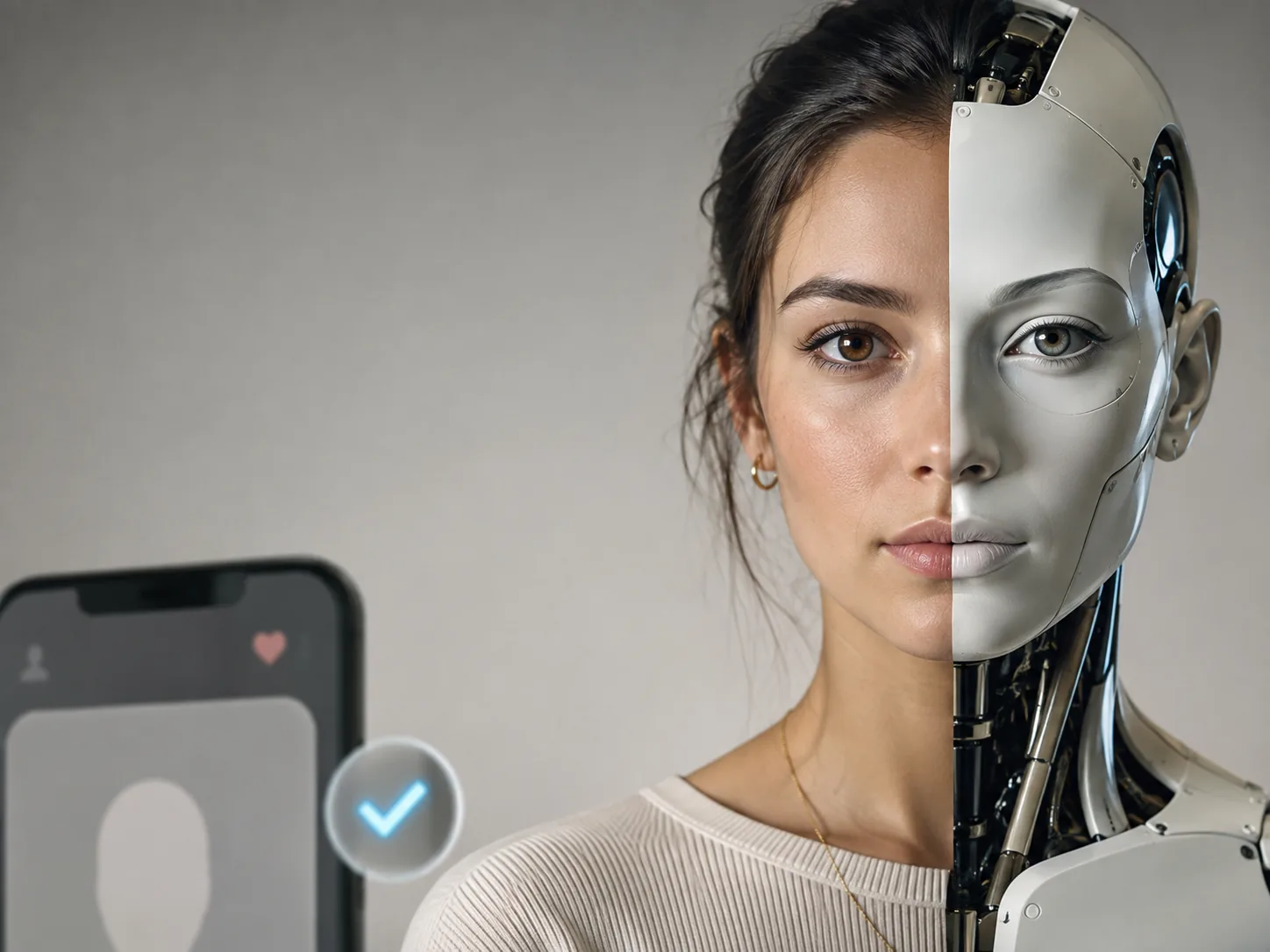
Maya Torres used to worry that a first date would look different from the profile.
Now she worries the profile may not belong to a person at all.
Torres, 29, has been using dating apps on and off for six years. She has encountered the usual disappointments: old photos, misleading height, conversations that disappear overnight. Over the last year, she added a new category.
“Too perfect,” she said.
She meant the photos, mostly. Skin without texture. Vacation pictures with lighting that looked expensive in every frame. Bios that were funny without being specific. Messages that arrived quickly, asked the right questions and somehow never wandered.
“You start looking for mistakes,” Torres said. “Which is a weird way to try to like somebody.”
Dating platforms have noticed the same shift.
Several major apps are expanding identity-verification systems this year, adding combinations of live video checks, government-ID matching and device-based authentication. Some are testing a new label — usually described as “human verified” or “live verified” — meant to tell users that a profile has passed a recent liveness check.
The badge says nothing about whether the person is honest, single or good company. It is meant to establish the more basic fact that a real person recently completed the check.
A problem that arrived gradually
Dating apps have dealt with fake profiles for as long as dating apps have existed.
What changed was the cost of making one convincing.
A scammer once needed stolen photos, a plausible biography and enough patience to keep a conversation going. Synthetic-image tools can now produce a consistent set of photographs for someone who has never existed. Voice models can generate calls. Text systems can maintain dozens of conversations at once while adapting tone, hobbies and flirtation to the person on the other side.
Those tools were not designed around dating fraud, but they have made many of the old warning signs less reliable.
Bad grammar is no longer useful evidence. A reverse-image search may find nothing because the picture was generated rather than stolen. A short voice call may establish only that someone has access to a voice model.
For users, the result is not constant panic. It is a low-grade suspicion that did not used to be part of the first conversation.
Why a blue check is no longer enough
Earlier verification systems usually asked users to take a selfie matching a pose shown on screen. That helped establish that a person controlling the account resembled the photos attached to it.
Newer systems are trying to prove more at once.
A live check may ask the user to turn their head, follow a moving point with their eyes or repeat a random phrase while the app analyzes whether the video appears to come from a real camera and a live face. Some platforms compare that result with an identification document. Others avoid storing the document itself and retain only a verification token.
The technical problem is awkward because the system has to be difficult to fake without becoming too invasive to use.
People who came to an app to meet someone generally do not expect to begin by proving their humanity to a facial-recognition system.
Yet users increasingly say they want some version of that proof from everyone else.
Verification changes behavior even before anyone opens the settings menu.
Daniel Cho, 34, said he now prefers profiles with ordinary photographs: a badly framed dinner picture, a friend half-cropped out of the edge, a dog looking away from the camera.
“I want to know you’re awkward,” he said. “That sounds terrible, but you know what I mean.”
What Cho meant was that small imperfections now help reassure him that he is looking at an ordinary person's camera roll rather than a generated set of images.
Cho said he is more suspicious of profiles that appear professionally assembled, particularly when the messages feel equally polished.
That creates an odd reversal for dating apps, which spent years encouraging users to improve their photographs and write better profiles. Some users are now deliberately making themselves look less optimized.
Torres stopped using generated suggestions for her profile last fall after a friend told her the result sounded “like a hotel website.”
Her current bio contains a typo she knows is there.
She has decided to leave it.
The authenticity economy
Dating companies increasingly treat verification as a core product feature rather than an optional safety tool.
Dating platforms have strong incentives to reduce impersonation and fraud, but they also have to avoid turning every interaction into a security procedure. Too little verification makes the service feel unsafe. Too much can make it feel like applying for a bank account.
The compromise varies by platform.
Some make stronger verification optional and give verified profiles more visibility. Others require it before users can send large numbers of messages or move money-related conversations off-platform. Several are experimenting with warnings when an account refuses repeated requests for a live check.
Privacy advocates have raised predictable concerns about how much biometric and identity data dating companies should collect in the process.
A dating profile already contains unusually personal information: location, preferences, photographs, relationship goals and private conversations. Adding identification records and facial data increases the consequences of a breach.
Users are being asked to trade some additional privacy for confidence that the person on the other side of the conversation exists. Many appear willing to make that trade, though not without reservations about what the platforms retain.
Video calls are becoming normal earlier
The simplest response has been social rather than technical: people are calling each other sooner.
Short video conversations that once felt like an awkward step between messaging and meeting have become routine for users trying to establish that the account, voice and face belong to the same person.
Those calls are not perfect evidence. Real-time face and voice manipulation continues to improve, and sophisticated fraud can survive more than a ten-minute conversation.
Most dating fraud is not sophisticated.
Requiring the other person to show up, react in real time and tolerate ordinary conversation still removes a large number of fake accounts.
It also has an unintended social effect: people reach the first date knowing more about each other than they used to.
For many users, that short call has become an expected step before meeting in person.
Proof is not trust
Verification ends once the app establishes identity. A real person can still lie.
They can use current photographs and misrepresent their life. They can pass a liveness check and be rude over dinner. They can be exactly who they said they were and still be wrong for the person sitting across from them.
Identity checks can establish who is behind the account, but they say very little about who that person will be across a table.
Torres said the new tools make her more comfortable, but she does not think they have made dating easier.
“It gets you back to the old problems,” she said, smiling. For now, she considers that an improvement.